
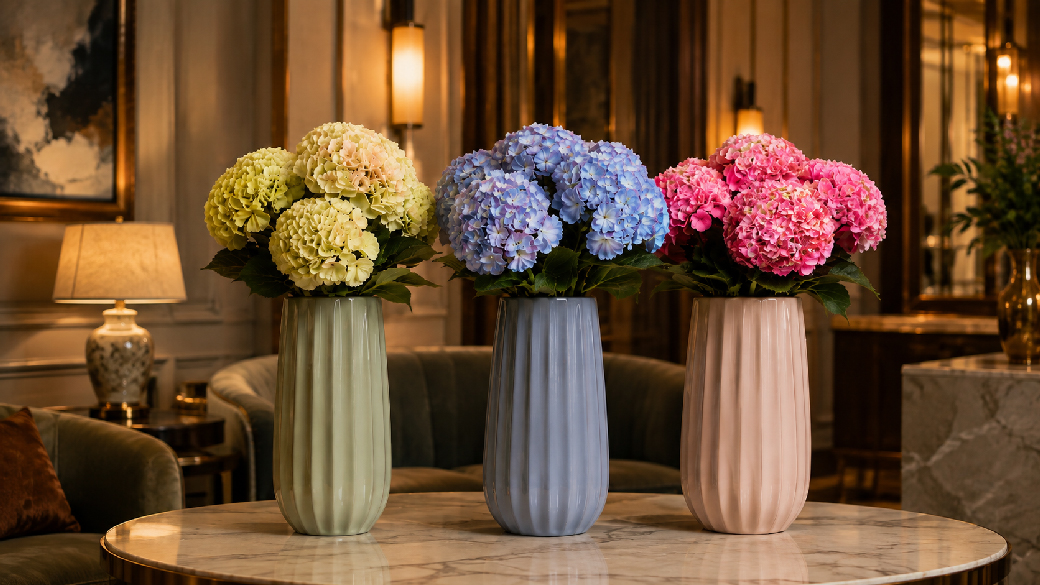
Three colour moods, three different effects: green, blue and pink artificial hydrangeas for elegant interiors. AI-modified image.
Artificial hydrangeas are an easy way to bring generous floral shapes and colour into an interior – without the care that fresh flowers require. Their large flower heads make them decorative enough to stand beautifully on their own, while several stems can be combined into lush arrangements for sideboards, dining tables or entrance areas.
Colour plays an important role in the overall effect. Green and cream create a soft, natural look, blue and lilac add depth and a modern touch, while pink introduces a lively, romantic accent.
In this guide, we show how to decorate with artificial hydrangeas, which vases complement the different colours and how to create arrangements that look relaxed, elegant and naturally balanced.
Why artificial hydrangeas look beautiful even on their own
Hydrangeas are naturally decorative because of their large, rounded flower heads. Even a single artificial hydrangeia stem can create a strong visual accent without looking overly formal or arranged.
Placed in a simple vase, one or two stems are often enough for a side table, shelf or small console. This works particularly well in calm interiors, where the flowers can act as a soft focal point without competing with the surrounding decor.
High-quality artificial hydrangeas also offer an advantage that fresh flowers cannot: their shape and colour remain consistent. There is no wilting, no need for water and no need to replace the arrangement after a few days.
For a natural look, avoid placing the stems too symmetrically. Slightly different heights and loosely positioned flower heads make the arrangement appear more relaxed and realistic.
Green & cream artificial hydrangeas – soft and natural
Green and cream hydrangeas are ideal for interiors that feel light, calm and understated. Their soft colouring works especially well with natural materials such as wood, linen, stone, ceramic and glass.
For a fresh, elegant arrangement, combine pale green hydrangeas with cream or off-white flowers in a simple vase. A clear glass vase keeps the look light, while matt ceramic creates a softer, more contemporary effect.
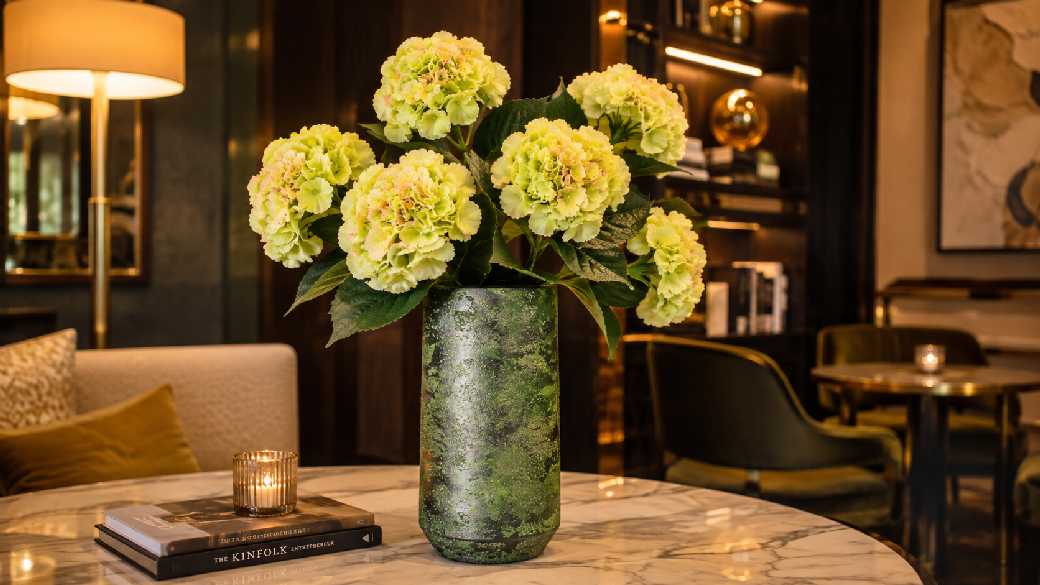
This colour combination is particularly suitable for:
- sideboards and consoles
- dining tables
- bright entrance areas
- bedrooms
- Scandinavian or natural-style interiors
The overall effect is subtle rather than dramatic. Green adds freshness, while cream tones soften the arrangement and make it easy to integrate into neutral interiors.
For a more generous display, several hydrangea stems can be grouped together. Keep the arrangement slightly loose rather than perfectly rounded to preserve a natural, relaxed appearance.
Blue & lilac artificial hydrangeas – elegant colour with depth
Blue and lilac hydrangeas create a more expressive look and bring depth, contrast and a refined touch to an interior. Depending on the surrounding colours, they can feel either cool and modern or soft and romantic.
They work particularly well with neutral shades such as white, grey, beige and taupe. For a more luxurious look, combine them with dark wood, smoked glass or subtle metallic accents.
A few stems in a tall glass or ceramic vase can make an elegant statement on a sideboard or console. For a fuller arrangement, mix different shades of blue and lilac rather than using one uniform colour. This gives the bouquet more dimension and helps it look more natural.
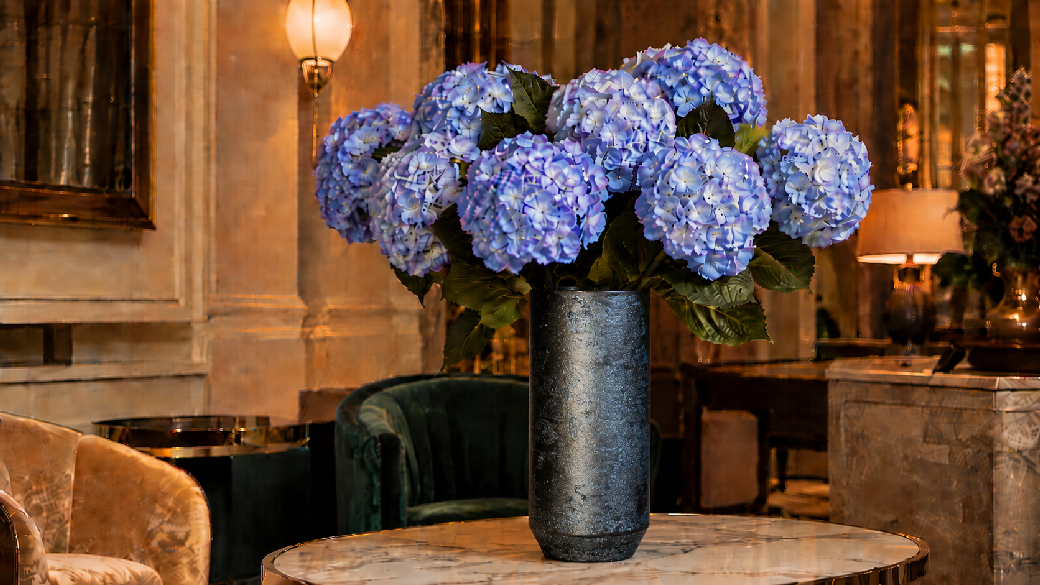
Blue and lilac hydrangeas are especially suitable for:
- living rooms with neutral furnishings
- elegant entrance areas
- bedrooms in soft grey or beige tones
- modern sideboards and consoles
- interiors with silver, brass or glass accents
Because these colours are already quite striking, the surrounding decoration can remain simple. A restrained vase and just a few carefully chosen accessories are usually enough.
Pink artificial hydrangeas – fresh, expressive and romantic
Pink hydrangeas bring a warm, lively and slightly romantic character to a room. Depending on the shade, they can feel delicate and understated or bold and expressive.
Soft blush and dusty pink tones work beautifully in light interiors with cream, beige, white or natural wood. Stronger pink shades create a more noticeable accent and are ideal when the flowers are intended to become the focal point of the arrangement.
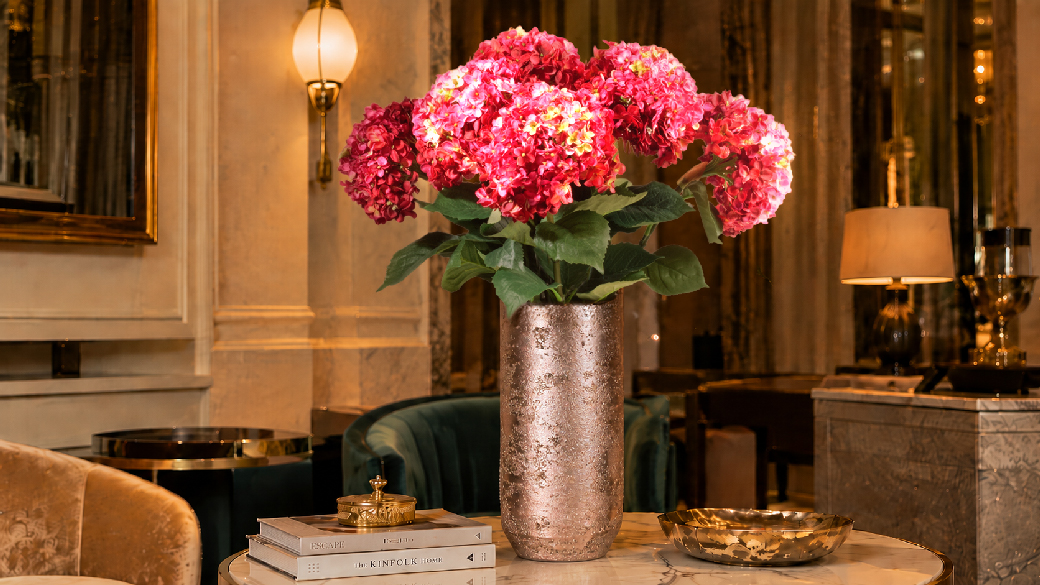
For a balanced look, combine pink hydrangeas with simple vases in glass, ceramic or muted neutral tones. A few stems are often enough for a dining table, sideboard or console. Larger arrangements can also work well in entrance areas or open-plan living spaces.
Pink hydrangeas are particularly suitable for:
- romantic and feminine interiors
- modern rooms with neutral furniture
- dressing tables and bedrooms
- dining tables and sideboards
- seasonal spring and summer decoration
To keep the arrangement elegant, avoid adding too many competing colours. Pink hydrangeas are most effective when their colour is allowed to stand out against a calm background.
Choosing the right vase for artificial hydrangeas
Because hydrangeas have large, voluminous flower heads, the vase should provide enough visual balance. A vase that is too narrow or too small can make the arrangement look top-heavy, while an overly decorative vase may compete with the flowers.
For individual stems or small groups, slim glass or ceramic vases work particularly well. Larger arrangements benefit from wider vessels that give the stems enough space and create a more generous overall shape.
The vase can also support the chosen colour scheme:
- Clear glass keeps the arrangement light and modern.
- Cream or white ceramic works beautifully with green, cream and soft pink hydrangeas.
- Grey, taupe or smoky glass complements blue and lilac tones.
- Dark or metallic finishes can create a more elegant, dramatic contrast.
Since artificial hydrangeas do not need water, you also have more freedom when choosing the vase. Decorative vessels that would be unsuitable for fresh flowers can often be used without any problem.
For the most natural effect, adjust the stem lengths so that the flower heads sit at slightly different heights rather than forming one perfectly even line.
Decorating different rooms with artificial hydrangeas
Artificial hydrangeas can be used throughout the home because they combine decorative volume with very little maintenance. The key is to adapt the size and colour of the arrangement to the room.
In the living room, a generous arrangement on a sideboard, console or coffee table can create a soft focal point. Green and cream tones keep the look calm and natural, while blue, lilac or pink add more colour.
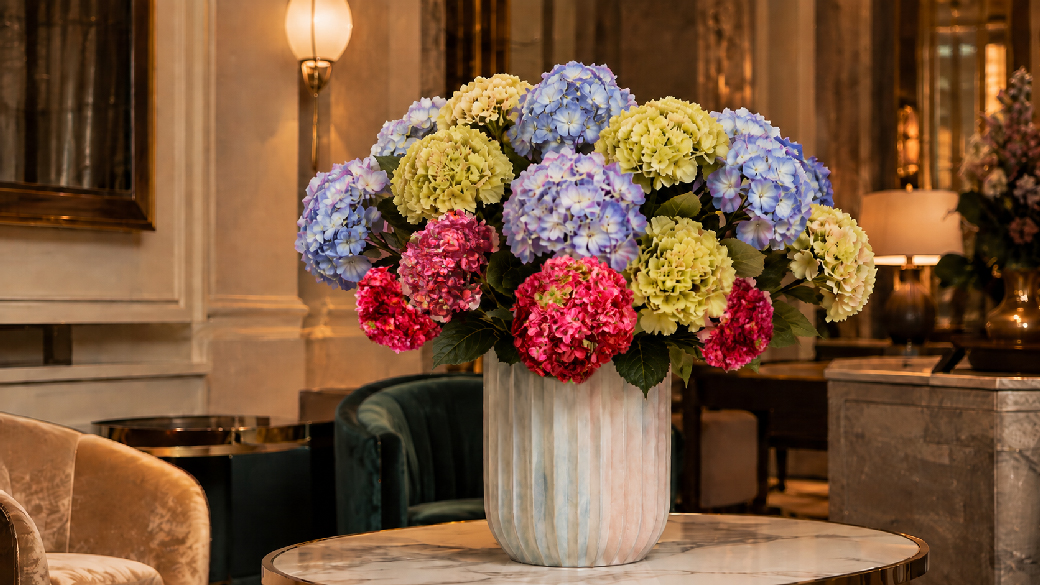
On the dining table, a lower arrangement usually works best so that the flowers do not interrupt the view across the table. A few hydrangea stems in a simple vase can add colour without making the setting feel crowded.
In an entrance area, larger hydrangea arrangements work particularly well on consoles or narrow tables. This is a good place for stronger colours, as the flowers can create an immediate decorative impression when entering the home.
For the bedroom, softer shades such as cream, pale green, blush pink or muted lilac create a more restful atmosphere. One or two stems on a dresser or bedside table are often enough.
Artificial hydrangeas are also a practical choice for rooms where fresh flowers are less convenient. Because they need no water and do not wilt, the arrangement can remain in place and be restyled whenever the interior changes.
How to make artificial hydrangeas look more natural
A convincing artificial flower arrangement depends less on perfect symmetry and more on small variations in shape, height and direction.
Before placing the hydrangeas in a vase, gently shape the stems, leaves and flower heads. High-quality artificial flowers are usually designed to be adjusted, allowing the arrangement to look looser and more natural.
A few simple details make a noticeable difference:
- vary the stem lengths slightly
- turn individual flower heads in different directions
- allow some leaves to remain visible between the blooms
- avoid arranging every stem at exactly the same angle
- combine related shades rather than using one perfectly uniform colour
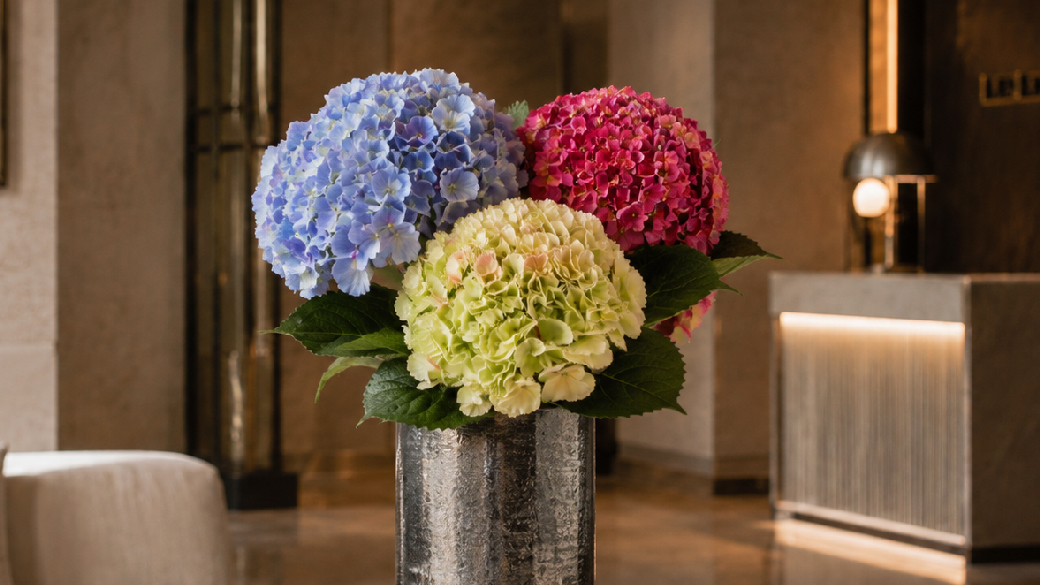
For a fuller bouquet, hydrangeas can also be combined with other high-quality artificial flowers or decorative foliage. The important thing is to keep the arrangement balanced and not overcrowded.
Artificial hydrangeas look particularly realistic when the composition feels slightly informal – as though the flowers have naturally fallen into place rather than being arranged with mathematical precision.
Combining artificial hydrangeas with other flowers and foliage
Artificial hydrangeas work beautifully on their own, but they can also form the basis of a more varied floral arrangement. Their large flower heads create volume, while smaller flowers and foliage add structure and movement.
For a soft, elegant look, combine hydrangeas with:
- artificial peonies or roses
- eucalyptus or delicate greenery
- smaller blossoms in similar colour tones
- decorative branches for additional height
Green and cream hydrangeas pair especially well with natural-looking foliage and white or beige flowers. Blue and lilac tones can be combined with muted violet shades, grey-green leaves or soft neutral blossoms. Pink hydrangeas work well with blush, cream and pale green accents.
To keep the arrangement harmonious, choose one main colour and use the additional flowers only as supporting accents. This prevents the bouquet from becoming too busy and allows the hydrangeas to remain the visual focus.
For a more contemporary look, mix just two or three flower types and leave some space between the stems. A looser composition often appears more sophisticated than a densely packed bouquet.
Artificial hydrangeas as seasonal decoration
Artificial hydrangeas are easy to adapt to different seasons simply by changing the surrounding accessories and colour combinations.
In spring, pale green, cream and soft pink tones create a fresh, light atmosphere. For summer, stronger pinks, blues and lilacs can introduce more colour and energy.
During autumn, muted hydrangea shades work well with natural materials, darker ceramics and warm decorative accents. In winter, cream, white or deep blue hydrangeas can be combined with understated metallic details for a more elegant seasonal look.
Because the flowers remain unchanged, the same stems can be reused throughout the year and restyled in different vases or arrangements. This makes artificial hydrangeas a flexible choice for interiors that are updated seasonally without requiring completely new floral decoration each time.
Artificial hydrangeas – versatile flowers for stylish interiors
Artificial hydrangeas combine generous floral shapes with long-lasting colour and almost effortless care. Whether you prefer the natural calm of green and cream, the elegant depth of blue and lilac, or the expressive warmth of pink, the flowers can be adapted to very different interior styles.
A few carefully arranged stems are often enough to create an elegant focal point. Combined with the right vase, complementary foliage and a relaxed arrangement, high-quality artificial hydrangeas can look surprisingly natural.
Their greatest advantage is flexibility: they require no water, do not wilt and can be rearranged again and again. From a simple single-stem display to a generous floral arrangement, artificial hydrangeas offer an easy way to bring colour, softness and a decorative floral accent into the home.
Frequently asked questions about decorating with artificial hydrangeas
How do you make artificial hydrangeas look realistic?
Shape the flower heads, leaves and stems before arranging them. Slightly different stem heights, varied angles and an asymmetrical composition usually create a more natural effect than a perfectly uniform bouquet.
Which vase is best for artificial hydrangeas?
Large hydrangea heads need a vase that visually balances their volume. Glass and ceramic vases are particularly versatile. Slim vases work well for one or two stems, while wider vessels are better for fuller arrangements.
Can artificial hydrangeas be combined with other artificial flowers?
Yes. Hydrangeas combine beautifully with artificial roses, peonies, eucalyptus and other decorative foliage. For a harmonious result, keep the colour palette limited and let the hydrangeas remain the main flowers.
Which artificial hydrangea colours are easiest to decorate with?
Green and cream are particularly versatile and suit neutral or natural interiors. Blue and lilac create more depth and elegance, while pink provides a warmer and more expressive accent.
Do artificial hydrangeas need water?
No. Artificial hydrangeas should be arranged in a dry vase. This also means you can use decorative vessels that may not be watertight.
Where can artificial hydrangeas be used in the home?
They are suitable for sideboards, dining tables, consoles, shelves, entrance areas and bedrooms. The size of the arrangement should be adapted to the available space so that the flowers enhance rather than overwhelm the room.
How should artificial hydrangeas be cared for?
Artificial hydrangeas require very little maintenance. Dust them gently from time to time and avoid prolonged exposure to strong direct sunlight, which can affect colours over the long term.


