
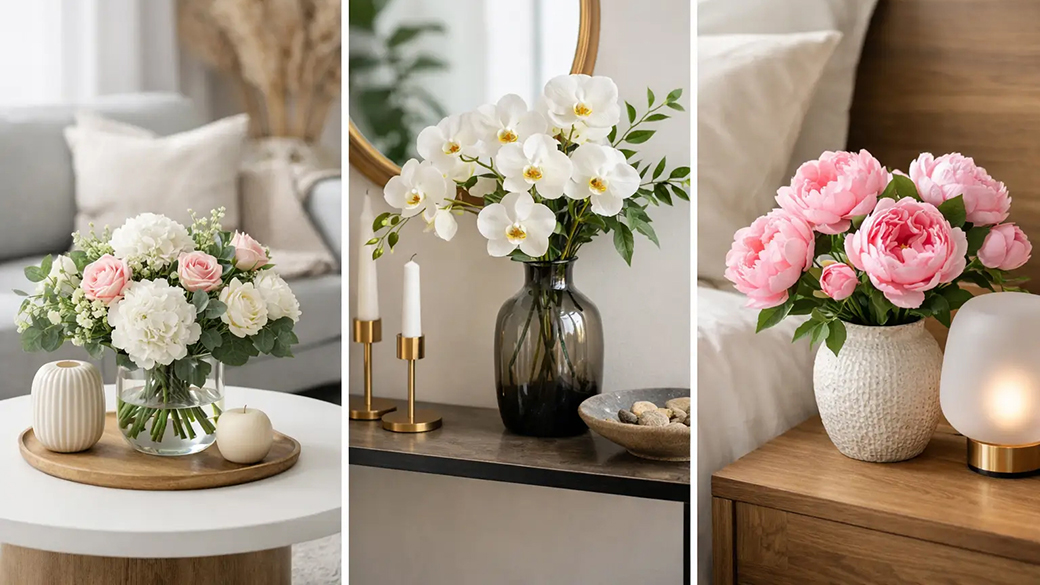
Artificial flowers bring lasting colour and decorative accents to different areas of the home. AI-modified image.
Artificial flowers are a simple way to bring colour, softness and a decorative touch into your home – without having to think about watering, wilting or seasonal availability. Depending on the flowers, colours and arrangement you choose, they can look elegant and understated, fresh and modern or warm and romantic.
They are also remarkably versatile. A carefully arranged bouquet can become a focal point in the living room, a few individual stems can add interest to a hallway console, while a compact arrangement can bring a refined finishing touch to a dining table or bedroom.
The key is to choose artificial flowers that suit both the room and the surrounding interior. In this guide, we show you how to use artificial flowers throughout your home and how to create arrangements that feel balanced, natural and stylish.
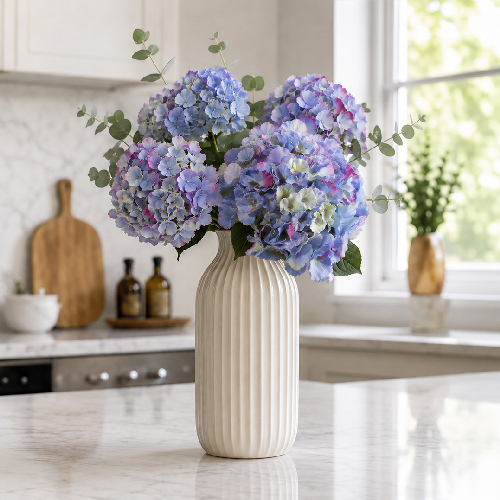
Why Artificial Flowers Work So Well in Home Decor
Artificial flowers combine decorative impact with everyday practicality. Unlike fresh flowers, they do not wilt after a few days and can remain part of an interior for months or even years.
Their main advantages include:
- No watering or regular care required
- Available throughout the year, regardless of the season
- Flexible placement, including rooms with little natural light
- Easy to restyle when you want to change colours or decorations
- Ideal for long-lasting arrangements on tables, shelves and sideboards
- Suitable for seasonal decor, from spring arrangements to festive winter displays
High-quality artificial flowers can also be combined with branches, foliage, dried elements or decorative accessories. This makes it easy to adapt an arrangement to your interior without replacing the entire decoration.
The most convincing results are usually created when the arrangement does not look too perfect. Slightly different stem heights, a loose composition and a carefully chosen vase help artificial flowers appear more natural and visually balanced.
How to Arrange Artificial Flowers Naturally
A successful arrangement should look relaxed rather than overly symmetrical. Artificial flowers often appear more convincing when the stems are placed at slightly different heights and angles, just as they would be in a fresh bouquet.
Start with a few larger flowers or branches to define the overall shape, then add smaller blooms and foliage around them. Leave some space between individual stems so that the arrangement does not feel too dense.
The vase also plays an important role. A narrow vase works well for a few elegant stems, while wider vessels suit fuller bouquets. Ceramic, glass and stoneware can all create very different effects depending on the style of the room.
For a particularly natural look, combine different flower sizes and shapes rather than using identical blooms throughout. A restrained colour palette often works especially well in modern interiors, while more colourful combinations can create a lively seasonal accent.
Artificial Flowers in the Living Room
The living room offers plenty of opportunities to decorate with artificial flowers. Depending on the size of the arrangement, they can either become a focal point or simply add a subtle decorative accent.
A larger bouquet works particularly well on a sideboard, console table or coffee table. For a calm, elegant look, choose flowers in two or three coordinated shades and combine them with a simple vase. Neutral tones such as white, cream, soft pink or muted green blend easily into modern interiors.
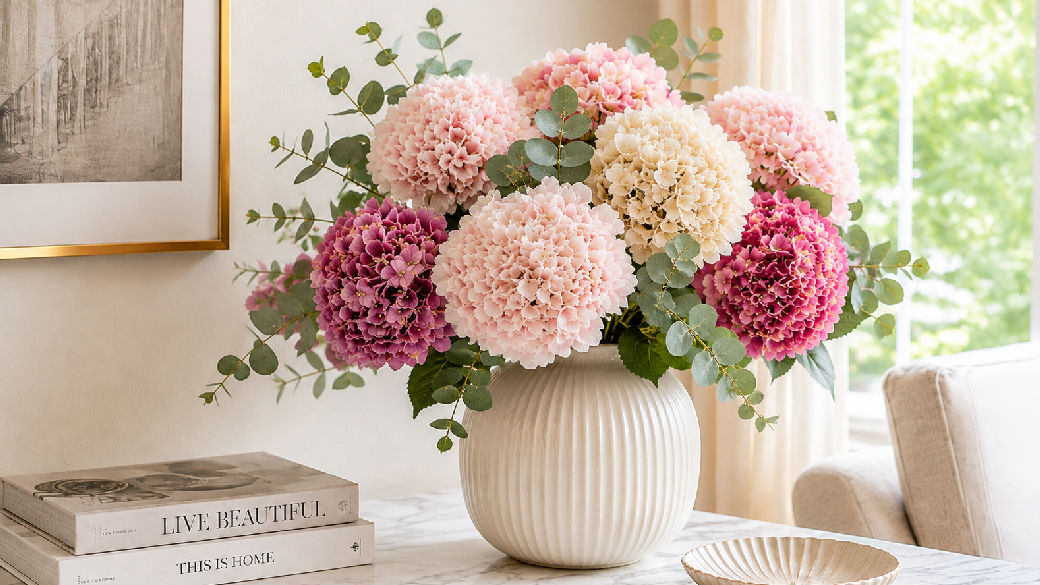
Smaller arrangements are ideal for shelves, window sills or occasional tables. A single stem or a few carefully selected flowers can often be more effective than a very full bouquet.
When placing artificial flowers in the living room, consider the surrounding decor as well. Cushions, artwork, ceramics and textiles can help repeat the colours of the flowers and create a more harmonious overall look.
Artificial Flowers for the Dining Table
Artificial flowers can make a dining table feel more inviting without requiring much effort. For everyday styling, a compact arrangement is usually the best choice, as it adds colour and texture without taking up too much space.
Low arrangements work particularly well because they do not interrupt the view across the table. A small bouquet in a ceramic or glass vase can create an elegant centrepiece, while a few individual stems offer a lighter, more minimalist look.
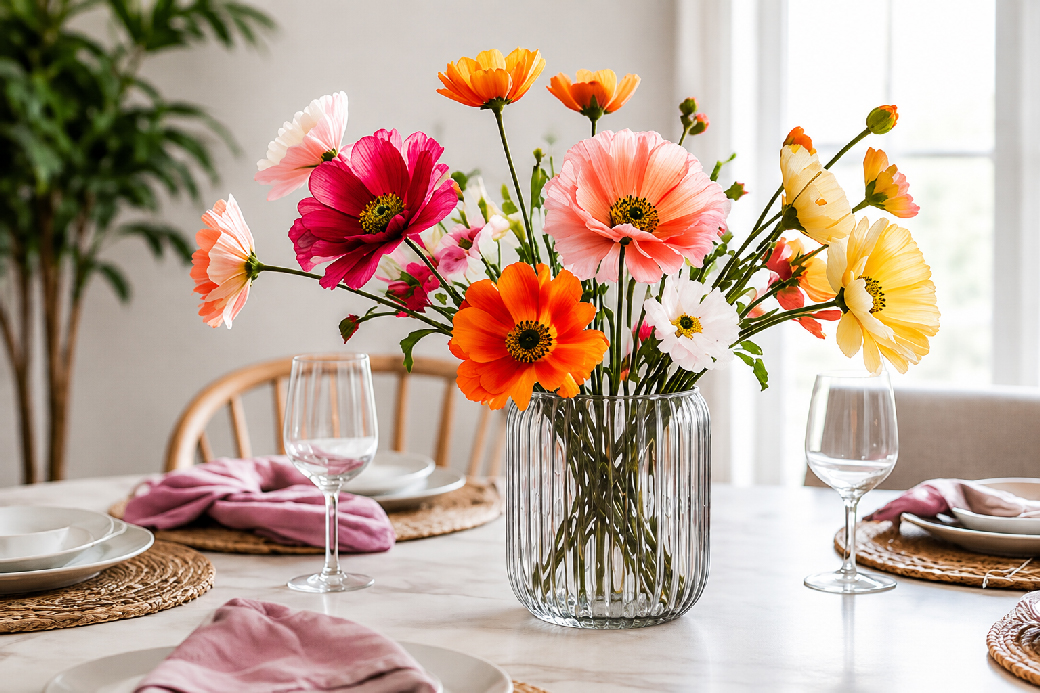
For larger tables, two or three smaller arrangements can sometimes look more balanced than one oversized bouquet. You can also combine flowers with candles, decorative bowls or seasonal accessories.
Try to keep the overall composition restrained. On a dining table, artificial flowers should complement the setting rather than dominate it.
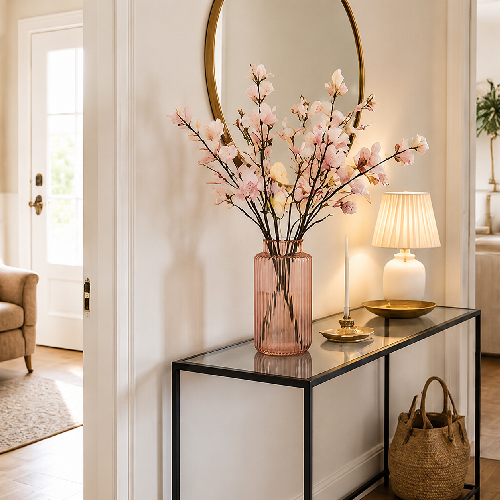
Artificial Flowers in the Hallway and Entrance Area
The hallway is often the first part of the home that guests see, making it a good place for a simple but welcoming floral arrangement.
A slim vase with a few artificial stems can add colour to a console table without making the space feel crowded. In narrower hallways, taller arrangements with a light, open shape usually work better than wide bouquets.
Artificial flowers are particularly practical here because entrance areas often receive less natural light than living rooms. They can therefore provide a decorative floral accent even in places where fresh flowers would be more difficult to maintain.
To create a harmonious look, coordinate the vase and flower colours with nearby elements such as a mirror, lamp, tray or decorative bowl. The arrangement should feel like part of the overall entrance styling rather than an isolated decoration.
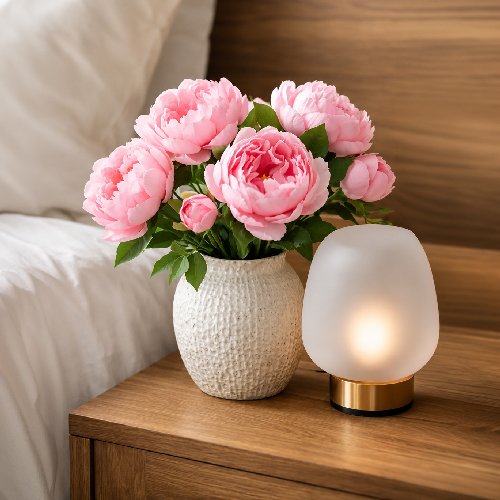
Artificial Flowers in the Bedroom
In the bedroom, artificial flowers can add softness and colour without making the space feel busy. Smaller, understated arrangements are usually the best choice, especially on bedside tables, dressers or window sills.
Soft shades such as cream, blush, pale pink or muted green can support a calm atmosphere, while a few carefully chosen stems often look more refined than a large bouquet.
A simple vase with one or two flowers can be enough to create a decorative accent. For a more romantic look, delicate blooms can be combined with subtle foliage, while cleaner shapes suit modern interiors.
Because artificial flowers require no watering, they are also practical in areas close to books, textiles or wooden furniture.
Seasonal Decorating with Artificial Flowers
One of the advantages of artificial flowers is that they can be restyled throughout the year. Instead of replacing the entire arrangement, you can simply change a few stems, colours or decorative details to match the season.
In spring, light tones, delicate blossoms and fresh green foliage create an airy look. Summer arrangements can be brighter and more colourful, while autumn works well with warm shades, branches and deeper natural tones. In winter, white flowers, evergreen elements and subtle metallic accents can create an elegant seasonal display.
Artificial flowers are especially useful for recurring decorations because they can be stored and reused. A favourite vase can remain in place while the arrangement changes with the seasons.
Keeping the seasonal styling subtle usually gives the most timeless result. A few carefully chosen details are often enough to change the atmosphere of a room.
Artificial Flowers as a Decorative Gift Idea
Artificial flowers can also be a thoughtful gift, especially for someone who enjoys interior decoration or prefers flowers that last.
A small arrangement in a decorative vase works well for birthdays, housewarmings or as a simple thank-you. Neutral colours are particularly versatile, while brighter flowers can be chosen to suit the recipient’s favourite shades or interior style.
For a more personal gift, combine the flowers with a vase, candle or other decorative accessory. This creates a complete arrangement that can be placed directly on a table, shelf or sideboard.
Unlike fresh flowers, artificial arrangements can remain part of the home for a long time and can be restyled whenever the decor changes.
How to Keep Artificial Flowers Looking Beautiful
Artificial flowers require very little care, but occasional cleaning helps them retain their colour and appearance.
Dust can usually be removed with a soft cloth, a feather duster or a gentle brush. For more delicate flowers, work carefully around petals and leaves so that their shape is not damaged.
It is also worth checking the arrangement from time to time. Stems can be repositioned, bent slightly or rearranged if the bouquet has lost its original shape.
Where possible, avoid placing artificial flowers permanently in very strong direct sunlight, as colours may fade over time depending on the materials used.
With a little attention, a good-quality artificial flower arrangement can remain an attractive part of your interior for a long time.
Floral Accents That Last
Whether you prefer a single hydrangea, a few elegant peonies or a colourful arrangement of different blooms, artificial flowers make it easy to adapt your decor to the room, season and personal interior style.
The most effective arrangements are not necessarily the largest. Carefully chosen flowers, balanced proportions and a vase that complements the surroundings are often enough to create a natural and stylish focal point.
At Rosemarie Schulz, you can discover a varied selection of artificial flowers in different colours and flower shapes – ideal for creating individual arrangements for your home that remain beautiful for a long time.
Frequently Asked Questions About Decorating with Artificial Flowers
Which artificial flowers look best in modern interiors?
For modern interiors, simple arrangements in a restrained colour palette usually work best. White, cream, soft pink, green and muted natural tones can be combined with clear glass, ceramic or stoneware vases for a calm, contemporary look.
How many artificial flowers should I put in a vase?
There is no fixed number. A narrow vase may only need one to three stems, while a wider vase can hold a fuller arrangement. The key is to avoid overcrowding and leave enough space between the flowers so the bouquet looks natural.
Can artificial flowers be used on a dining table?
Yes. Artificial flowers are particularly practical for dining tables because they require no maintenance. Low or compact arrangements are usually the best choice, as they allow guests to see one another comfortably across the table.
How can I make artificial flowers look more realistic?
Vary the height and angle of the stems, combine different flower shapes and avoid arranging everything too symmetrically. Adding foliage and choosing a suitable vase can also make the overall composition appear more natural.
Can I decorate with artificial flowers all year round?
Yes. Artificial flowers can be used throughout the year and adapted to the seasons by changing colours, foliage or decorative accessories. This makes them particularly versatile for long-term home decor.
Where should artificial flowers not be placed?
It is best to avoid locations with permanently strong direct sunlight, as some materials may fade over time. They should also be kept away from very hot surfaces or open flames.


