
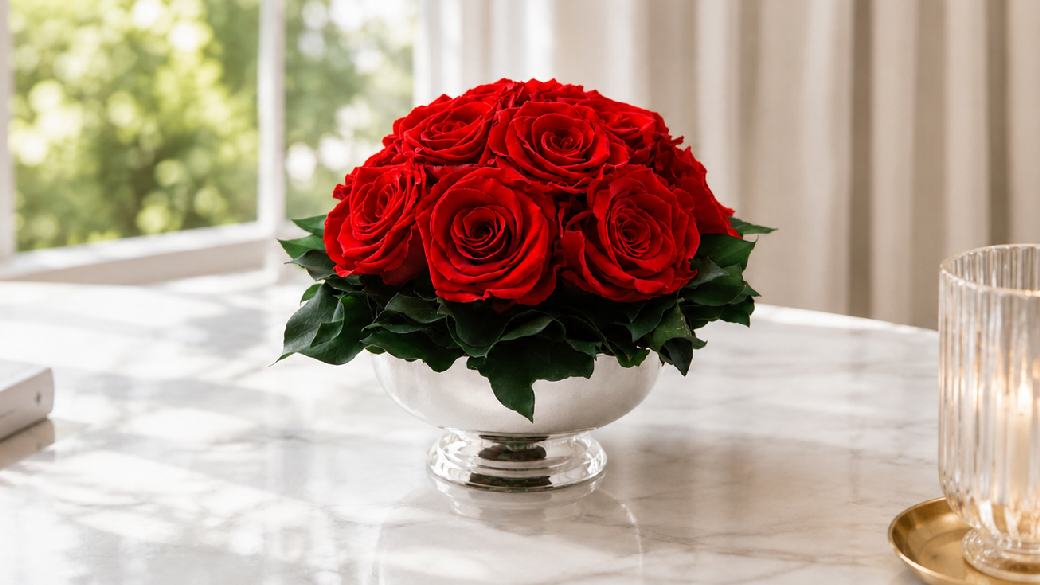
Preserved roses can be displayed in bright interiors – prolonged direct sunlight should simply be avoided.
Preserved flowers are designed to stay beautiful for a long time without water or daily care. However, their appearance can still be influenced by their surroundings – and sunlight is one of the most important factors.
Direct sunlight, especially over longer periods, can cause the colours of preserved roses and other preserved flowers to gradually fade or change. UV radiation and heat can affect the pigments used during the preservation process, which is why the right placement plays an important role in keeping the flowers looking beautiful for as long as possible.
The good news is that preserved flowers do not need to be kept in a dark room. Bright, indirect daylight is usually perfectly suitable. What should be avoided is prolonged exposure to strong, direct sunlight, for example on a very sunny windowsill.
In this guide, we explain why preserved flowers can fade, where to place them in your home and what you can do to protect their colours for longer.
Why Do Preserved Flowers Fade?
Preserved flowers are real flowers that have been treated so they retain their natural shape and soft appearance for a long time. During this process, the flower’s natural moisture is replaced with a preserving solution, and the flowers are often carefully coloured to create an even and attractive finish.
If you would like to learn more about how preserved roses are made, our guide What Are Preserved Roses? Everything You Need to Know About Infinity Roses explains the preservation process in more detail.
Although preservation makes the flowers much more durable than fresh flowers, they are not completely unaffected by their surroundings.
UV light is one of the main causes of colour changes. If preserved flowers are exposed to strong, direct sunlight over a long period, their colours may gradually become lighter, less intense or slightly different in tone.
Heat can also contribute to this process. A sunny windowsill, for example, may expose the flowers not only to UV radiation but also to significantly higher temperatures.
How quickly a colour changes depends on several factors, including:
- the intensity and duration of the sunlight
- the position of the flowers in the room
- the original colour of the flower
- temperature and general indoor conditions
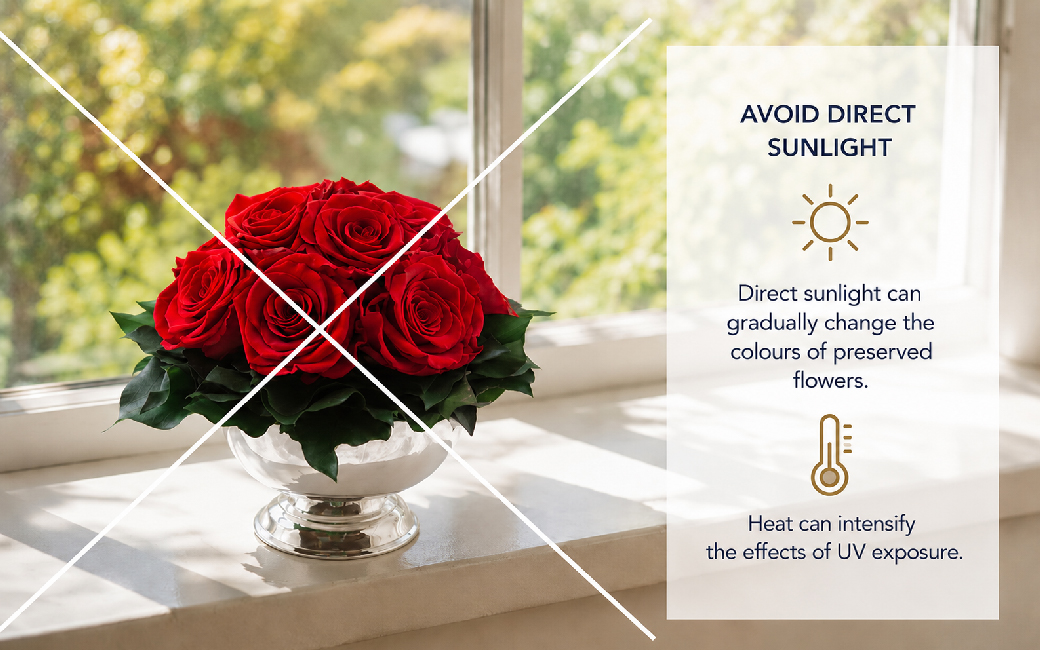
For this reason, preserved flowers are best suited to indoor spaces with bright but indirect light. With the right placement, their colours can remain attractive for a considerably longer time.
Where Is the Best Place to Display Preserved Flowers?
The ideal location for preserved flowers is a place with plenty of natural light but no strong, direct sunlight.
A sideboard, shelf, console table or dining table can work very well, provided the flowers are not exposed to intense sun for several hours each day. Positions close to a window are also possible if the light is filtered by curtains, blinds or the orientation of the room.
Places to avoid include:
- very sunny windowsills
- conservatories with strong direct sunlight
- positions directly next to radiators or other heat sources
- outdoor areas such as balconies or terraces
Preserved flowers are intended primarily for indoor use. They do not need water, and they should also be protected from high humidity.
A useful rule is simple: if a spot feels very hot or is exposed to strong sunlight for long periods, it is probably not the best place for preserved flowers.
In a bright room with indirect daylight, however, preserved Infinity Roses and floral arrangements can be displayed beautifully without hiding them away from natural light.
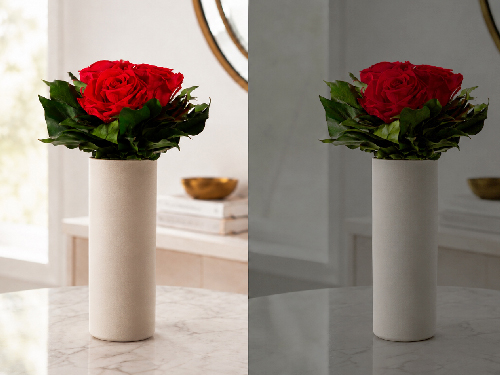
Why Can the Same Rose Colour Look Different Depending on the Light?
Light does not only influence how colours age – it also changes how we perceive them.
A preserved rose can look noticeably different depending on whether it is displayed in bright daylight, warm artificial light or a darker part of the room. Red roses, for example, may appear particularly rich and vibrant under bright lighting, while the same shade can look much deeper or darker in a less illuminated space.
We experienced this ourselves at a trade fair in Paris. Under the bright exhibition lighting, our preserved red roses appeared especially intense and luminous. Later, when similar roses were displayed in a darker entrance area, the colour seemed considerably deeper.
The roses themselves had not changed – the lighting conditions changed the way the colour was perceived.
This is worth considering when choosing preserved flowers for a particular room. If you want a certain shade to have a specific effect, look at the flowers under lighting conditions that are similar to those in the room where they will eventually be displayed.
Especially with strong colours such as red, dark red, blue or violet, the surrounding light can make a noticeable visual difference.
How to Keep Preserved Flowers Beautiful for Longer
Preserved flowers require very little care, but a few simple precautions can help maintain their colour and appearance for as long as possible.
The most important points are:
- Keep them out of direct sunlight. Bright, indirect daylight is usually fine.
- Do not water them. Preserved flowers no longer need water and should always be kept dry.
- Avoid high humidity. Bathrooms and other very humid rooms are generally less suitable.
- Keep them away from heat sources. Radiators, fireplaces and very warm windowsills can affect the flowers over time.
- Handle them gently. Preserved petals can be more delicate than fresh ones and should not be pressed or frequently touched.
Dust can usually be removed carefully with a soft brush or a gentle stream of cool air from a distance.
With the right placement and minimal handling, preserved roses with stems and other preserved flower arrangements can retain their decorative appearance for a long time – without watering, trimming or regular maintenance.
What Works Best in Very Sunny Rooms?
Very bright rooms can still be suitable for preserved flowers. The key is to avoid positions where the flowers are exposed to strong, direct sunlight for several hours a day.
If a room receives a lot of sun, choose a location slightly further away from the window or place the arrangement where curtains or blinds soften the light. A console table, shelf or sideboard can often provide enough distance from the window while still allowing the flowers to benefit from the brightness of the room.
It can also help to observe how the light changes during the day. A spot that is shaded in the morning may receive strong afternoon sun, especially in south- or west-facing rooms.
For particularly sunny interiors, we recommend:
- choosing a position away from direct window light
- using sheer curtains or blinds to filter strong sunlight
- avoiding hot windowsills
- checking whether the flowers receive intense afternoon sun
- moving arrangements seasonally if the light changes significantly
This does not mean preserved flowers need to be kept in dim spaces. On the contrary, they often look especially attractive in bright interiors. The goal is simply to combine good visibility with protection from prolonged direct sunlight.
What Can You Do If the Colour Has Already Faded?
Once the colour of preserved flowers has visibly faded, it usually cannot be fully restored. The change affects the pigments in the petals themselves, so simply moving the flowers to a darker place will not bring the original shade back.
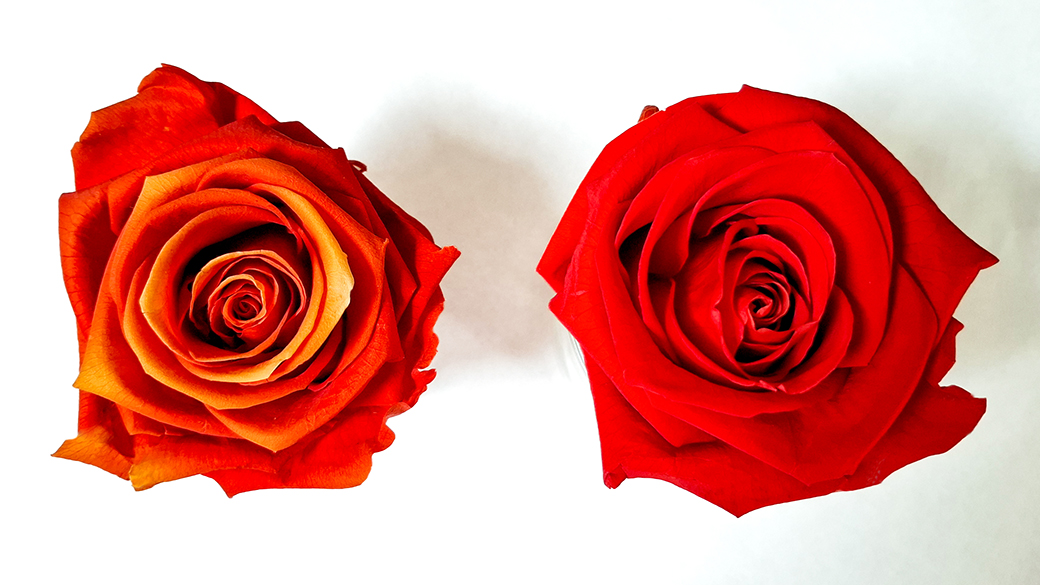
However, you can still prevent further fading by changing the placement.
Move the arrangement away from direct sunlight and choose a spot with bright, indirect light instead. This can help slow down additional colour changes.
If only one side of the arrangement has been exposed to the sun, you may also notice that the colour has faded unevenly. In this case, turning or repositioning the arrangement can improve its overall appearance, although it will not reverse the fading itself.
We generally do not recommend trying to recolour preserved flowers at home. Sprays, paints or moisture can alter the natural surface of the petals and may damage their delicate structure.
The best approach is therefore prevention: protect preserved flowers from strong direct sunlight from the beginning. This gives their colours the best chance of remaining attractive for as long as possible.
Conclusion: Keep Preserved Flowers Out of Direct Sunlight
Preserved flowers are long-lasting, decorative and easy to care for, but their colours can still be affected by prolonged exposure to strong sunlight.
For the best results, place preserved roses and other preserved flowers in a bright indoor location with indirect daylight. Avoid very sunny windowsills, strong heat and high humidity, and the flowers can retain their appearance for much longer.
The most important point is simple: preserved flowers do not need darkness, but they should be protected from direct sunlight.
With the right placement, they can remain an elegant part of your interior for a long time – without water and with very little maintenance.
For more information about preservation, care, storage and different ways to display real long-lasting roses, discover our Preserved Roses guides.
Frequently Asked Questions About Preserved Flowers and Sunlight
Can preserved flowers be placed near a window?
Yes, as long as they are not exposed to strong, direct sunlight for long periods. A bright position with indirect daylight is usually suitable.
Do preserved roses need sunlight?
No. Preserved roses do not need sunlight to stay beautiful because they are no longer growing. Light is only important for how they are displayed and perceived in the room.
How quickly do preserved flowers fade in direct sunlight?
There is no fixed timeframe. The speed of fading depends on the intensity of the sunlight, the duration of exposure, the colour of the flowers and the indoor conditions. Strong UV exposure can accelerate colour changes.
Can faded preserved roses regain their original colour?
Usually not. Once the pigments have visibly faded, the original colour cannot simply be restored. Moving the flowers away from direct sunlight can, however, help prevent further fading.
Is indirect sunlight safe for preserved flowers?
Yes. Bright, indirect daylight is generally a good choice for preserved flowers. The main risk comes from prolonged exposure to strong, direct sunlight and heat.


