
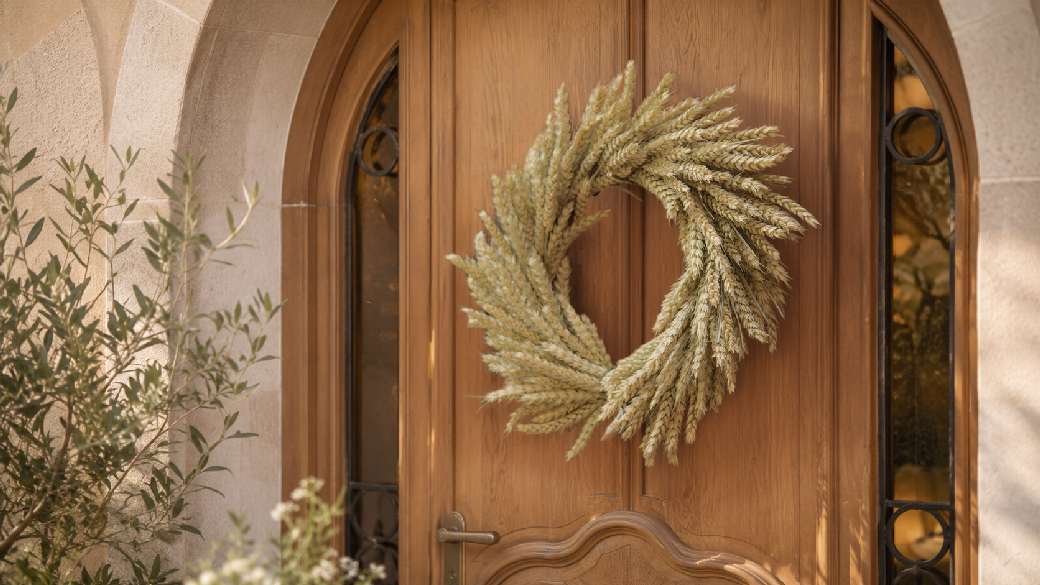
Dried flower wreaths are best displayed in a sheltered entrance protected from rain, moisture and strong sunlight.
A dried flower wreath on the front door creates a warm and welcoming first impression while bringing natural textures and soft colours to the entrance of your home.
But which wreath works best? The choice depends on the size and style of the door, the materials used and, above all, how well the entrance is protected from the weather.
Oats create a soft, natural look, while wheat and barley add more structure. Quaking grass feels light and delicate, whereas dried lavender introduces violet tones and a Mediterranean character.
In this guide, we explain how to choose the right dried flower wreath for your front door, from size and colour to placement and care.
Why Choose a Dried Flower Wreath?
Dried flowers and grasses have softer, more muted colours than fresh flowers, allowing their natural textures to become part of the design.
Wreaths made from oats, wheat, barley or quaking grass work particularly well if you prefer a neutral, natural look. Lavender adds more colour and creates a distinctive Mediterranean feel.
Because these are natural materials, no two wreaths look exactly the same. Slight differences in stem length, colour and shape are part of their handcrafted character.
If you would like to discover more ways to decorate your home with dried flowers, our guide Buying Dried Flowers: How to Choose the Right Bouquet for Your Home offers further inspiration.
Which Wreath Shape Suits Your Entrance?
A full circular wreath creates a classic and substantial look, while a loosely arranged grain wreath appears lighter and more relaxed.
Asymmetrical designs can work particularly well with modern entrances, while lavender wreaths often benefit from a slightly irregular shape that preserves their natural character.
As a general rule, detailed doors work well with quieter wreaths, while simple doors can accommodate fuller or more expressive arrangements.
Choosing the Right Size
The wreath should be large enough to be clearly visible without overwhelming the door.
- 25–35 cm: for smaller doors or a subtle look
- 30–40 cm: for many standard front doors
- 45–55 cm: for wider doors or larger entrance areas
With loose grain wreaths, consider the overall visible diameter, including longer stems and ears, rather than the inner wreath base alone.
Which Wreath Colours Suit Which Front Door?
Natural dried flowers are easy to combine with many door colours.
- White or cream doors: wheat, barley, oats and lavender all work beautifully.
- Grey doors: both warm golden grasses and cooler lavender tones create a harmonious look.
- Black or dark doors: lighter beige and golden materials provide an attractive contrast.
- Green doors: wheat, barley and lavender work particularly well with sage and other muted greens.
- Natural wood doors: light grasses and understated botanical colours complement the warmth of the wood.
A useful rule is simple: dark doors generally benefit from lighter wreaths, while pale doors can accommodate warmer or deeper natural tones.
Can You Hang a Dried Flower Wreath Outside?
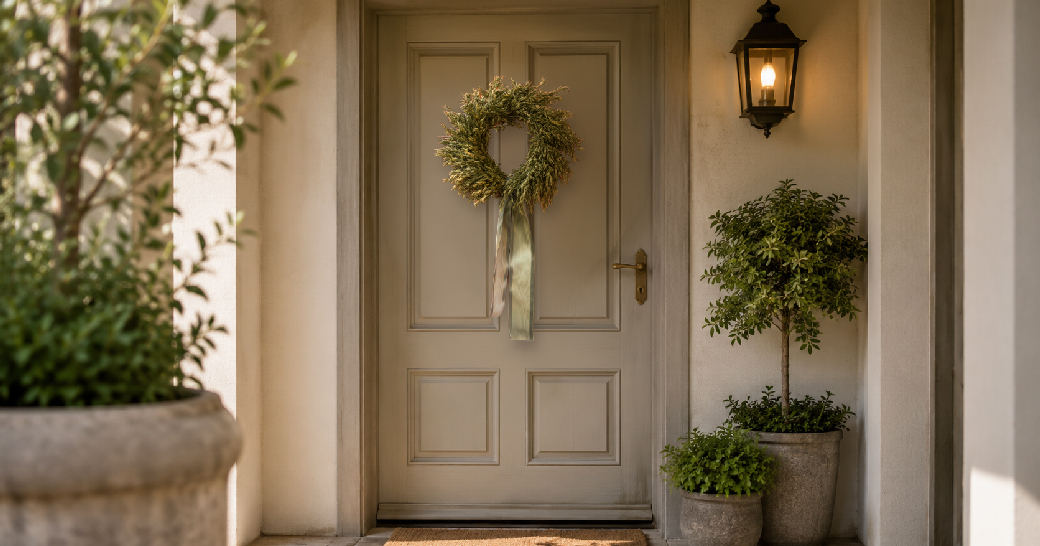
Yes, provided the location is well protected from the weather.
A covered front door, porch or sheltered entrance is ideal. Dried flowers are not fully weatherproof and should be protected from:
- rain and persistent moisture
- strong direct sunlight
- snow
- strong wind
Moisture can soften or discolour the materials, while sunlight may gradually fade their natural colours.
In short: dried does not mean weatherproof.
How to Hang Your Wreath Safely
A slim over-the-door wreath hanger is a practical option for many doors and avoids drilling holes.
Depending on the door material, a magnetic hanger may also work. Alternatively, the wreath can be suspended from a strong ribbon or cord secured over the top of the door.
Whatever method you choose, make sure the wreath sits securely and does not swing excessively when the door is opened or in windy conditions.
How to Care for a Dried Flower Wreath
Dried flower wreaths require very little care.
Keep the wreath dry and never water it. Dust can be removed gently with a soft feather duster or a very light stream of cool air from a distance.
Avoid frequent touching, as delicate stems and blossoms may become brittle over time. We also recommend avoiding hairspray or other fixing sprays, as they can alter the natural surface or colour of the materials.
Some gradual fading is completely natural, especially with coloured flowers such as lavender. A shaded location will help preserve the colours for longer.
For more practical advice, read our guide How to Care for Dried Flowers.
Which Style Suits Your Home?
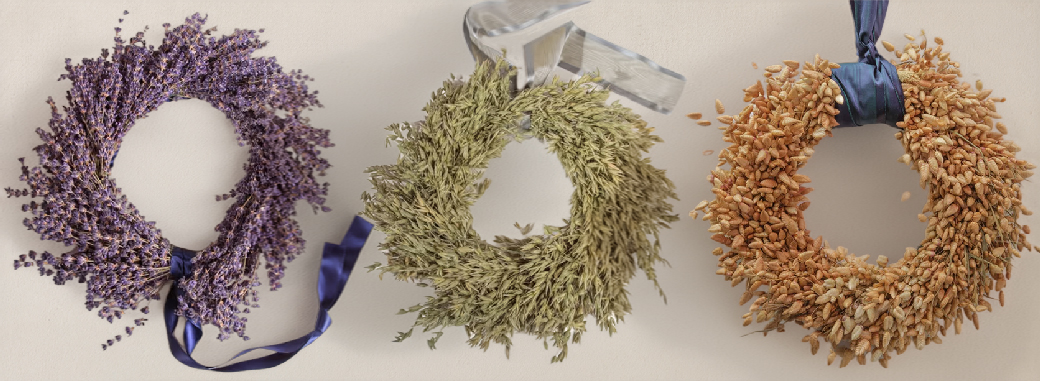
For a natural or Scandinavian look, choose oats, wheat or quaking grass in soft neutral tones.
For a country house style, fuller wheat or barley wreaths create a traditional and welcoming effect.
For a modern entrance, asymmetrical arrangements and limited colour palettes work particularly well.
For a Mediterranean look, lavender is an ideal choice, especially with white, cream, sage green or natural wood doors.
Floral Craftsmanship from Our Heidelberg Atelier
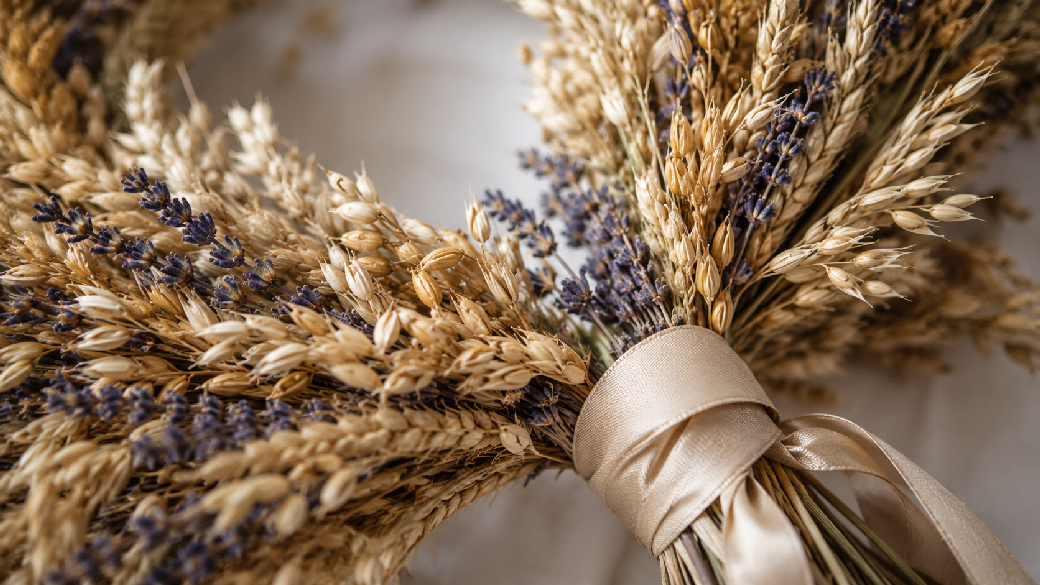
At Rosemarie Schulz, dried flower wreaths are arranged by hand in our Heidelberg atelier.
The natural movement of the grasses, grains and flowers remains visible rather than being forced into a perfectly uniform shape. Small variations in stems, colours and textures therefore become part of the design.
This approach reflects the floral tradition of Rosemarie Schulz in Heidelberg since 1974: combining craftsmanship, natural materials and contemporary decorative ideas.

A Natural Gift for a New Home
A dried flower wreath can also make a thoughtful housewarming or new home gift.
Neutral wreaths made from oats, wheat or barley are particularly versatile, while lavender is a good option for someone who prefers more colour.
Unlike fresh flowers, the wreath requires no water and can immediately become part of the recipient's home decor.
FAQ: Dried Flower Wreaths for Front Doors
How long does a dried flower wreath last?
With careful placement and handling, a dried flower wreath can remain decorative for a long time. Its lifespan depends mainly on the materials and environmental conditions.
Can I hang a dried flower wreath outside?
Yes, but only in a protected location such as a covered doorway or porch.
Can a dried flower wreath get wet?
It is best to keep it dry. Repeated moisture can damage or discolour the natural materials.
Does a dried flower wreath need water?
No. Dried flowers should never be watered.
Will dried flowers fade in sunlight?
Yes. Strong direct sunlight can gradually fade natural and coloured materials.
What size wreath works best for a front door?
For many standard doors, an overall diameter of around 30–40 cm creates a balanced look.
Which dried flowers work well in a wreath?
Wheat, oats, barley, quaking grass and lavender are all attractive choices, depending on the style and colour you prefer.
Finding the Right Dried Flower Wreath
The right dried flower wreath should complement both your front door and the style of your home.
Natural grains such as wheat, oats and barley create a calm and understated look, while lavender adds colour and a Mediterranean character.
For the longest-lasting result, choose a sheltered location protected from rain, strong sunlight and excessive moisture.
At Rosemarie Schulz, we create dried flower wreaths with a focus on natural materials, balanced proportions and handcrafted details in our Heidelberg atelier.
For more inspiration, discover our guide to choosing the right dried flower bouquet for your home or learn how to care for dried flowers.


